Education Helps You Earn a Living. Life Skills Help You Build a Life.
Schools teach us mathematics, science, history, and languages. These subjects build our academic foundation, but once we enter the real world, we quickly discover that success depends on much more than marks and degrees.
Managing emotions, communicating effectively, making difficult decisions, handling setbacks, and building healthy relationships are skills that influence our careers every single day. Yet, they rarely form part of a traditional curriculum.
Whether you’re a fresher entering your first job or an experienced professional leading a team, mastering these life skills can make a significant difference in your personal and professional growth.
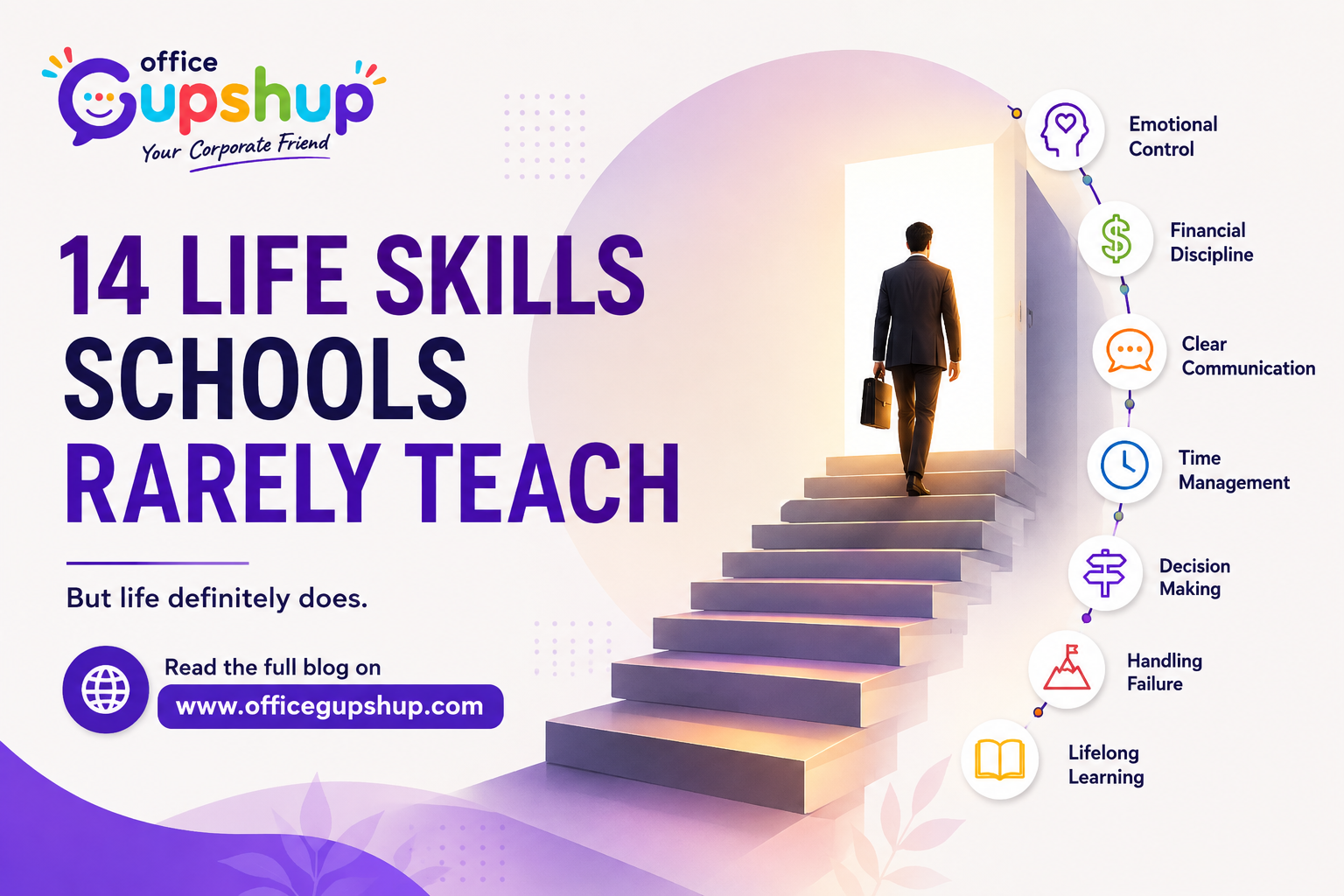
Let’s explore the 14 life skills that deserve as much attention as academic education.
1. Emotional Control
Your emotions influence your decisions, relationships, and reputation.
Emotional control doesn’t mean suppressing your feelings—it means responding thoughtfully instead of reacting impulsively.
Professionals who stay calm under pressure often earn greater trust and respect.
2. Financial Discipline
A high salary doesn’t automatically create wealth.
Learning to budget, save, invest wisely, and avoid unnecessary debt provides financial security and reduces stress throughout life.
Financial discipline is a habit, not an income level.
3. Active Listening
Most people listen to reply.
Successful professionals listen to understand.
Active listening strengthens relationships, reduces misunderstandings, and improves teamwork.
4. Clear Communication
Ideas have value only when others understand them.
Whether you’re presenting to clients, speaking with your manager, or guiding your team, clear communication creates confidence and credibility.
5. Time Management
Everyone receives the same 24 hours.
The difference lies in priorities.
Managing your time effectively helps reduce stress, improve productivity, and create better work-life balance.
6. Self-Awareness
Understanding your strengths, weaknesses, values, and behaviour is one of the most valuable skills you can develop.
Self-aware professionals accept feedback better and continuously improve.
7. Critical Thinking
Don’t accept information simply because everyone believes it.
Ask questions.
Evaluate facts.
Think independently.
Critical thinking helps you solve problems instead of merely reacting to them.
8. Decision-Making
Perfect information rarely exists.
Learning to make informed decisions despite uncertainty is an essential leadership skill.
Every career is shaped by the quality of decisions we make.
9. Conflict Resolution
Disagreements are inevitable.
How you handle them defines your maturity.
Learning to resolve conflicts respectfully strengthens both professional and personal relationships.
10. Building Healthy Habits
Small daily habits create long-term success.
Good sleep, regular exercise, continuous learning, and consistent routines often outperform short bursts of motivation.
11. Handling Failure
Failure isn’t the opposite of success.
It is often part of the journey.
Professionals who learn from setbacks become more resilient, adaptable, and confident.
12. Setting Boundaries
Saying “yes” to everything eventually means saying “no” to yourself.
Healthy boundaries protect your time, energy, and mental well-being while improving productivity.
13. Staying Consistent
Motivation comes and goes.
Consistency creates lasting results.
Small actions repeated every day often achieve more than occasional extraordinary efforts.
14. Lifelong Learning
The world changes faster than ever.
The professionals who continue learning remain relevant.
Reading, attending workshops, acquiring new skills, and staying curious are investments that compound throughout your career.
Final Thoughts
Degrees may open doors, but life skills determine how far you go once you’re inside.
Technical knowledge helps you get the job.
Life skills help you build a successful career, stronger relationships, better financial health, and greater personal happiness.
At Office Gupshup, we believe learning shouldn’t stop after graduation. The workplace teaches lessons every day—but those who intentionally develop these essential life skills stay ahead of the curve.
Remember:
Your qualification may get you hired. Your life skills will determine how far you grow.